Author: admin11

  • No More Optional: Deconstructing the 4 Biggest Changes to the HCS Exam Pattern

    Preparing for a state civil services exam is a high-stakes endeavor, demanding strategy, discipline, and a clear understanding of the examination pattern. For aspirants targeting the Haryana Civil Services (HCS), the Haryana Cabinet has just recalibrated the very DNA of the HCS examination, signaling a strategic pivot towards a new evaluation philosophy. This analysis cuts through the noise to distill the four most impactful takeaways from the new HCS exam structure, helping you understand what these changes truly mean for your preparation.

    1. The Biggest News: Your Optional Subject is Officially Gone

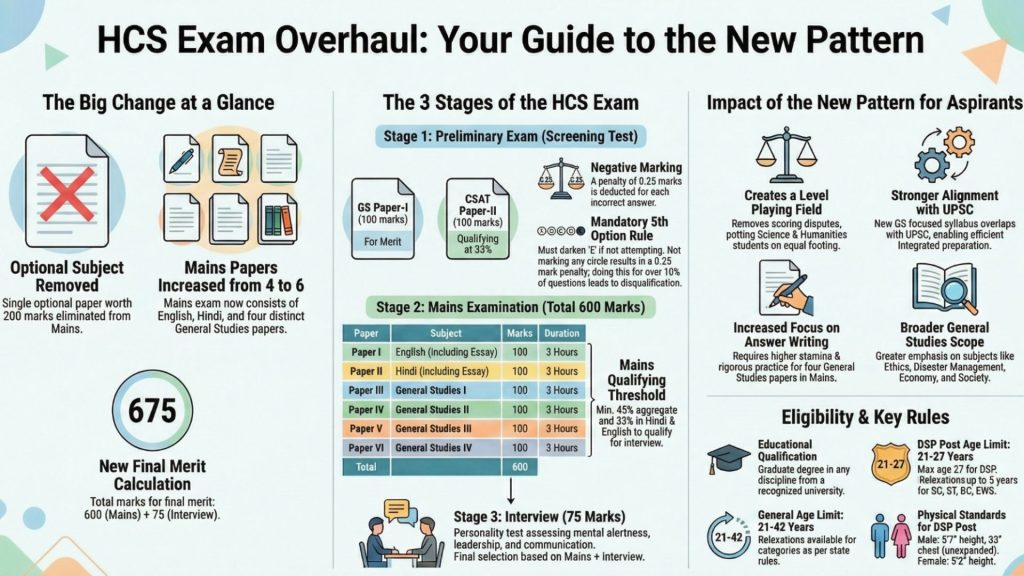
    The single most significant change is the complete removal of the optional subject paper from the Mains examination. Previously, this paper was worth 200 marks and required deep, specialized knowledge in a single discipline.

    This move is designed to create a “Level Playing Field” for all candidates. By eliminating the optional paper, the commission aims to resolve the long-standing controversies surrounding the scaling and normalization of marks. Historically, certain optional subjects were perceived as being more “scoring” than others, creating a potential disadvantage for candidates with humanities backgrounds compared to those from science or technical streams. The focus in the Mains exam now shifts entirely to the General Studies, Hindi, and English papers, rewarding broad-based knowledge over niche expertise.

    2. The New Blueprint: It’s All About General Studies (and UPSC Alignment)

    With the removal of the optional paper, the Mains exam has been restructured and expanded from four papers to six, bringing the total marks for the written exam to 600. The new blueprint consists of four distinct General Studies papers, emphasizing a comprehensive and multi-disciplinary knowledge base.

    The new structure is as follows:

    Language Papers

    • Paper I: English (Including Essay) – 100 Marks

    • Paper II: Hindi (Including Essay) – 100 Marks

    General Studies Papers (Merit-Ranking)

    • Paper III: General Studies I – 100 Marks

    • Paper IV: General Studies II – 100 Marks

    • Paper V: General Studies III – 100 Marks

    • Paper VI: General Studies IV – 100 Marks

    The strategic implication of this change is a clear and deliberate “UPSC Alignment.” This new structure brings the HCS Mains exam much closer to the pattern of the UPSC Civil Services Mains, offering concrete advantages for serious aspirants. This allows for more efficient parallel preparation by enabling the use of the same study materials and notes for large portions of both syllabi, creating significant overlap in current affairs preparation, and opening the door for integrated test series that cater to both examinations. The expanded GS syllabus will also place a greater emphasis on topics such as Ethics, Disaster Management, Economy, and Society.

    3. The Prelims Has a Hidden Trap: Ignore Option ‘E’ at Your Peril

    A peculiar and crucial rule has been introduced for the objective-type Preliminary exam that aspirants must not overlook. Each question in the Prelims papers will now have five options: A, B, C, D, and E.

    The fifth option, ‘E’, serves a specific purpose: if a candidate chooses not to attempt a question, they are required to darken the circle for option ‘E’. This rule is a mechanism to ensure candidates make a conscious decision to leave a question unanswered, preventing stray marks or ambiguities on OMR sheets and holding aspirants accountable for every single question. Failing to follow this protocol comes with strict penalties.

    Here are the consequences you must know:

    • If you leave a question completely blank by not darkening any of the five circles, one-fourth (0.25) of a mark will be deducted.

    • If you darken more than one circle for a single question, it will be treated as an incorrect answer, and you will incur the same 0.25 negative marking.

    • Most critically, if you fail to darken any of the five circles for more than 10% of the total questions, you will be disqualified from the exam.

    4. The Mains Marathon: More Papers and Stricter Hurdles to Clear

    The revised Mains examination is now a more demanding marathon, consisting of six descriptive papers totaling 600 marks. This increased volume requires significantly more answer-writing practice and greater stamina from candidates.

    To be shortlisted for the interview and personality test, candidates must clear two mandatory hurdles. Aspirants must view these as two distinct, non-negotiable gates.

    • Score a minimum of 33% in both the Hindi and English papers individually.

    • Score a minimum of 45% in the aggregate total marks of all six written papers combined.

    Excelling in General Studies is futile if you fail to clear the 33% language threshold, a common pitfall for those neglecting Hindi and English preparation. Only candidates who satisfy both conditions will move to the final stage. The final merit list will be prepared based on the total marks obtained in the Mains Written Examination (600 marks) and the Interview/Personality Test (75 marks), for a grand total of 675 marks.

    Conclusion

    The recent overhaul of the HCS exam pattern signals a clear shift in philosophy. The exam has become a more standardized, General Studies-centric test that rewards broad knowledge, analytical ability, and consistent writing skills over deep specialization in a single subject. These changes level the playing field and bring the state exam into closer alignment with the national-level civil services examination.

    With the HCS pattern now mirroring the UPSC exam so closely, will this usher in a new era of integrated preparation for aspirants across the country?

    📌 Understanding the new HCS pattern is only the first step — preparing for it strategically is what decides selection.
    Subscribe to the Chetan Bharat Learning (CBL) YouTube channel for in-depth HPSC–HCS guidance rooted in UPSC-style thinking.
    👉 Subscribe here: https://www.youtube.com/@aimharyana

    📞 For a personalized preparation strategy based on your background and target post, call 9779353345.
  • HCS परीक्षा में 5 चौंकाने वाले बदलाव: क्या आप इन नए नियमों के लिए तैयार हैं?

    हरियाणा सिविल सेवा (HCS) परीक्षा के पैटर्न में एक बड़े बदलाव की खबर ने सभी उम्मीदवारों का ध्यान खींचा है। वैकल्पिक विषय का हटना निश्चित रूप से सबसे बड़ी सुर्खी है, लेकिन इस बड़े बदलाव के शोर में कुछ और महत्वपूर्ण, आश्चर्यजनक और अक्सर अनदेखे किए गए नियम भी हैं जो किसी भी उम्मीदवार की सफलता या असफलता का कारण बन सकते हैं।

    यह लेख केवल वैकल्पिक विषय हटने की बात नहीं करेगा, बल्कि उन पांच सबसे प्रभावशाली बदलावों पर से पर्दा उठाएगा जिन्हें हर गंभीर HCS उम्मीदवार को न केवल जानना, बल्कि अपनी तैयारी की रणनीति में शामिल करना भी ज़रूरी है। आइए इन नए नियमों को विस्तार से समझते हैं।

    1. वैकल्पिक विषय खत्म: अब खेल सबके लिए बराबर है

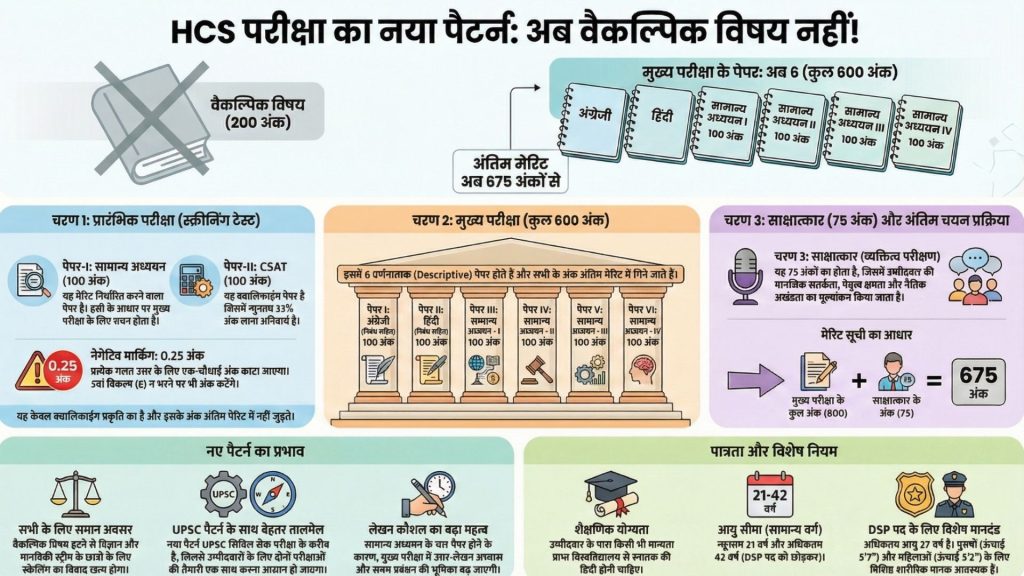
    सबसे बड़ा और स्पष्ट बदलाव यह है कि HCS मेन्स परीक्षा से 200 अंकों के वैकल्पिक पेपर को पूरी तरह से हटा दिया गया है। यह एक बहुत महत्वपूर्ण कदम है क्योंकि यह सभी उम्मीदवारों के लिए एक “समान अवसर का मैदान” (Level Playing Field) तैयार करता है। इस बदलाव से विज्ञान और मानविकी विषयों के बीच स्कोरिंग में आने वाले अंतर और स्केलिंग/नॉर्मलाइजेशन से जुड़े विवाद कम होंगे।

    इस रणनीतिक बदलाव का सीधा मतलब है कि अब तैयारी का पूरा ध्यान सामान्य अध्ययन (GS) पर केंद्रित हो गया है। यह बदलाव उन उम्मीदवारों को पुरस्कृत करेगा जो मजबूत अंतःविषय सोच (interdisciplinary thinking) रखते हैं, क्योंकि अब उन्हें विभिन्न GS पेपरों के बीच संबंध स्थापित करने की आवश्यकता होगी – जैसे कि GS-III की आर्थिक नीतियों को GS-II के सामाजिक न्याय से जोड़ना।

    2. प्रीलिम्स का रहस्यमयी ‘पांचवां विकल्प’

    HCS प्रीलिम्स परीक्षा में एक अनूठा और चौंकाने वाला नियम है जिसके बारे में हर उम्मीदवार को पता होना चाहिए। यहां प्रत्येक प्रश्न के लिए पांच विकल्प (A, B, C, D, और E) दिए जाते हैं। यह सिर्फ एक अतिरिक्त विकल्प नहीं है, बल्कि इसके गंभीर परिणाम हैं।

    • यदि आप किसी प्रश्न का उत्तर दे रहे हैं, तो आपको A, B, C, या D में से किसी एक गोले को काला करना होगा।

    • यदि आप किसी प्रश्न का उत्तर नहीं दे रहे हैं, तो आपको ‘E’ गोले को अनिवार्य रूप से काला करना होगा

    • यदि आप किसी प्रश्न के लिए सभी पांचों गोले खाली छोड़ देते हैं, तो एक-चौथाई (0.25) अंक काट लिया जाएगा

    • यदि कोई उम्मीदवार 10% से अधिक प्रश्नों में किसी भी गोले को नहीं भरता है, तो उसे अयोग्य घोषित कर दिया जाएगा

    यह सिर्फ नेगेटिव मार्किंग का नियम नहीं, बल्कि आपकी उम्मीदवारी बचाने की एक अनिवार्य शर्त है। एक छोटी सी प्रक्रियात्मक चूक आपको प्रतियोगिता से पूरी तरह बाहर कर सकती है।

    3. मेन्स अब एक नई मैराथन है: ज़्यादा पेपर, ज़्यादा लेखन

    नए पैटर्न के तहत, मेन्स परीक्षा का विस्तार चार पेपर से बढ़ाकर छह पेपरों तक कर दिया गया है। अब आपको निम्नलिखित छह पेपर देने होंगे:

    • अंग्रेजी (निबंध सहित)

    • हिंदी (निबंध सहित)

    • सामान्य अध्ययन-I

    • सामान्य अध्ययन-II

    • सामान्य अध्ययन-III

    • सामान्य अध्ययन-IV

    इन छह पेपरों के कुल 600 अंक और इंटरव्यू के 75 अंक मिलाकर ही 675 अंकों की अंतिम मेरिट लिस्ट तैयार की जाएगी, जो आपके चयन का आधार बनेगी।

    इस बदलाव का सीधा परिणाम यह है कि उम्मीदवारों को अब बहुत अधिक लिखने की आवश्यकता होगी। सफलता के लिए अब उत्तर-लेखन का निरंतर अभ्यास और परीक्षा के दौरान मानसिक और शारीरिक सहनशक्ति बनाए रखना पहले से कहीं ज़्यादा महत्वपूर्ण हो गया है। यह नया GS-भारी ढाँचा HCS परीक्षा को UPSC पैटर्न के और भी करीब लाता है, जिससे दोनों परीक्षाओं की एक साथ तैयारी करने वाले गंभीर उम्मीदवारों के लिए यह अधिक कुशल हो गया है। विशेष रूप से, GS-IV (नीतिशास्त्र) जैसे पेपर का जुड़ना यह स्पष्ट संकेत देता है कि आयोग अब केवल तथ्यात्मक ज्ञान ही नहीं, बल्कि उम्मीदवारों की नैतिक और प्रशासनिक योग्यता का भी आकलन करना चाहता है, जो पूरी तरह से UPSC की सोच के अनुरूप है।

    4. भाषा के पेपर हैं आपके द्वारपाल: इन्हें हल्के में न लें

    मेन्स परीक्षा में सफल होकर इंटरव्यू के लिए चुने जाने के लिए अब दोहरी शर्तों को पूरा करना अनिवार्य है। इन शर्तों को समझना बेहद ज़रूरी है:

    • शर्त 1: उम्मीदवार को सभी लिखित मेन्स पेपरों के कुल अंकों में से कम से कम 45% अंक प्राप्त करने होंगे।

    • शर्त 2: उम्मीदवार को हिंदी और अंग्रेजी दोनों पेपरों में अलग-अलग न्यूनतम 33% अंक प्राप्त करने होंगे।

    ये भाषा के पेपर सचमुच आपके द्वारपाल हैं। सामान्य अध्ययन में असाधारण अंक लाने के बाद भी, यदि आप इन दोनों में से किसी एक द्वार को भी 33% अंकों के साथ पार नहीं कर पाते, तो आपके लिए इंटरव्यू का मुख्य द्वार कभी नहीं खुलेगा।

    5. DSP बनने का सपना? पहले अपनी उम्र और कद जांच लें

    हरियाणा सिविल सेवा में पुलिस उपाधीक्षक (Deputy Superintendent of Police – DSP) का पद एक प्रतिष्ठित विकल्प है, लेकिन इसके लिए कुछ विशेष और सख्त मानदंड हैं जिन्हें उम्मीदवारों को आवेदन करने से पहले जांच लेना चाहिए।

    • अधिकतम आयु: अन्य पदों के लिए 42 वर्ष के विपरीत, DSP के लिए अधिकतम आयु 27 वर्ष है।

    • आयु में छूट: 5 साल की छूट केवल SC, ST, BC और EWS श्रेणियों के उम्मीदवारों के लिए उपलब्ध है (अर्थात, अधिकतम आयु 32 वर्ष)।

    • शारीरिक मानक (पुरुष): ऊंचाई 5’7” (170.18 सेमी), छाती 33” (बिना फुलाए) और 34.5” (फुलाकर)।

    • शारीरिक मानक (महिला): ऊंचाई 5’2” (157.50 सेमी)।

    कई उम्मीदवार सभी पदों के लिए एक समान ऊपरी आयु सीमा मानकर तैयारी करते हैं और अंत में DSP पद की वरीयता भरने से चूक जाते हैं। यह एक आम गलती है जिससे बचना चाहिए। आवेदन करने से पहले ही इन विशिष्ट मानदंडों की जांच करना आपकी पहली प्राथमिकता होनी चाहिए।

    निष्कर्ष

    HCS परीक्षा का नया पैटर्न केवल सतही बदलाव नहीं है; यह एक रणनीतिक विकास है जो विशेषज्ञता के बजाय व्यापक ज्ञान, रटने की क्षमता के बजाय लेखन कौशल और प्रक्रियात्मक जागरूकता को प्राथमिकता देता है। केवल वैकल्पिक विषय के हटने पर ध्यान केंद्रित करने के बजाय, इन सभी पांच महत्वपूर्ण बदलावों को समझना और अपनी रणनीति को उसके अनुसार ढालना सफलता की कुंजी है।

    इन बदलावों के साथ, HCS अब UPSC के और भी करीब आ गया है। इस नए युग में सफल होने के लिए आपकी तैयारी की रणनीति कितनी व्यापक और सटीक है?

    📌 नया पैटर्न समझना ही नहीं, उसे सही तरीके से लागू करना ही सफलता है।
    ✔️ गहराई से समझने के लिए CBL YouTube चैनल सब्सक्राइब करें: https://www.youtube.com/@aimharyana
    ✔️ और अपनी व्यक्तिगत तैयारी रणनीति के लिए 9779353345 पर कॉल करें

  • Best IAS Institute in Chandigarh

    Best IAS Institute in Chandigarh

    Chetan Bharat Learning (CBL) stands out as one of the most dynamic and innovative IAS coaching institutes in Chandigarh, offering a unique blend of academic excellence, mentorship, and technology-driven learning. Founded by educator and engineer Chetan Bharat, the institute has become a beacon for aspirants seeking quality guidance for UPSC and state civil service examinations.

    Vision and Mission

    Chetan Bharat Learning was established with the mission to produce high-caliber civil servants who can lead India with integrity, intellect, and empathy. The institute’s philosophy revolves around “Awakening India” through education by making quality coaching accessible and affordable to students from all backgrounds. Under the guidance of its founder, Chetan Bharat (an engineer from Glasgow University and an IIM-K alumnus), the institute emphasizes both knowledge acquisition and character development .

    Courses Offered

    CBL provides a comprehensive suite of preparatory programs that cater to various civil service examinations including UPSC, IAS, PCS, HCS, HAS. Its academic structure focuses on every stage of the journey — from foundational knowledge to advanced test preparation. Major offerings include:

    • Foundation Courses for conceptual clarity  
    • Comprehensive Online and Offline Batches covering Prelims, Mains, and Interview stages  
    • Optional Subject Courses such as PSIR and Geography  
    • Specialized Initiatives like Mains Answer Writing, UPSC Mentorship Programs, 

    The flexibility in learning modes (both online and offline) makes CBL particularly adaptable to the modern aspirant’s lifestyle .

    Faculty Excellence

    One of the most lauded aspects of Chetan Bharat Learning is its faculty team — a collective of deeply qualified educators with real examination experience. The team includes professionals who have appeared in UPSC interviews, cleared state civil services, and hold advanced degrees from prestigious institutions like IIM Kozhikode and Thapar Institute . Key subjects and respective educators include:

    • International Relations & Ethics – B.E. Glasgow, M.A. (Political Science), LLB, MBA (IIM-K)  
    • Polity & Governance – 10+ years of teaching experience, LLB  
    • Economics & Post-Independence India – UGC NET-qualified (4 times)  
    • Science & Technology – B.E., Electronics Engineer  
    • Languages & Essay Writing – 10+ years of experience (MBA, M.A. English)  
    • History & Sociology – Over a decade of mentoring experience  

    Their mentorship approach is credited with nurturing numerous toppers like Ria Kaur Sethi (AIR 89, UPSC 2024) and Sumer Singh Virk (Rank 284, UPSC 2022) .

    Why Chetan Bharat Learning Leads in Chandigarh

    • Highly qualified mentors with civil service exposure  
    • Balanced focus on conceptual learning and exam strategy  
    • Consistent track record of producing rank-holders  
    • Affordable and accessible course plans  
    • Robust digital + offline ecosystem for hybrid learners 

    Chetan Bharat Learning isn’t just an academy; it embodies a mentorship culture that transforms aspirants into achievers. With its blend of commitment, innovation, and excellence, it continues to set the benchmark for IAS coaching in Chandigarh and North India.

  • Hello world!

    Welcome to WordPress. This is your first post. Edit or delete it, then start writing!